Fennel
 |
|
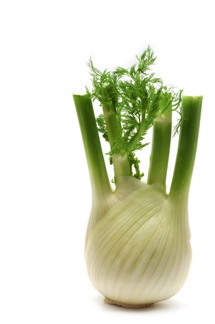
Florence fennel has a broad bulb and stems that can be added raw to salads or cooked into healthy side dishes. Snip the feathery green foliage and sprinkle over foods as a flavor-boosting garnish. |
This aromatic plant is known for its crunchy bulb, celery-like stems, feathery green foliage and tasty seeds, all of which are edible. As a member of the Umbellifereae family, fennel is closely related to parsley, carrots, dill and coriander. It has a mild, refreshing and slightly sweet flavor that is popular in Italian cooking and Mediterranean cuisine.
History
Though bulb fennel has only been popular in the U.S. for the past decade or so, it has been used all over Europe and Asia for centuries. The Greeks regarded it as both a slimming aid and hangover cure, and the Romans used the herb-like leaves as a seasoning. In 17th century Italy, fennel (finocchio) was often served at the end of a meal with a sprinkle of salt.
Varieties
Fennel can be categorized into two main types:
Florence fennel, cultivated throughout the Mediterranean and United States, has a broad, bulbous bulb that's used as a vegetable. Both the base and stems can be eaten raw or cooked, and the greenery can be used as a garnish or snipped and sprinkled over foods like fresh dill.
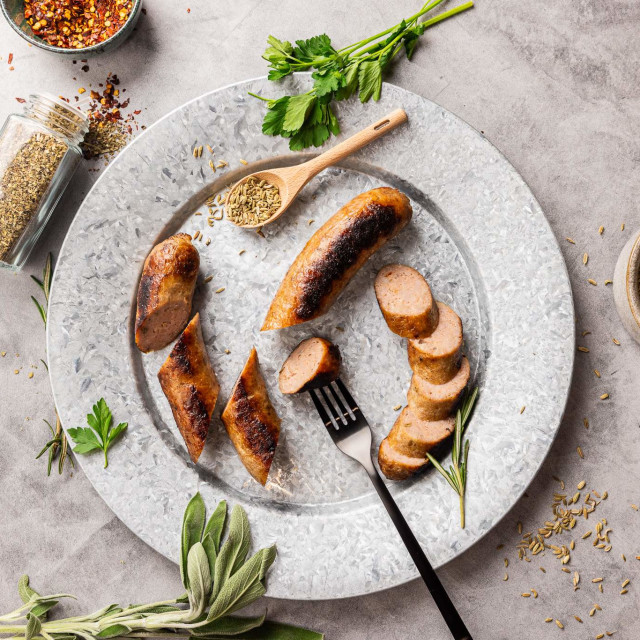
Common fennel is the variety used to produce fennel seeds. These oval, greenish-brown seeds are available whole or ground and are used to flavor both sweet and savory foods, as well as many liqueurs. Common fennel is bulbless, but the stems and greenery can be used in the same ways as Florence fennel.
Buying Tips
Fennel is usually available from fall through early spring. Choose firm, clean bulbs without signs of splitting, bruising or browning. The stalks and greens should be a fresh green color. Signs of flowering buds indicate the vegetable is past maturity. Fresh fennel should have a fragrant aroma, lightly reminiscent of licorice or anise.
At some markets, Florence fennel is mislabeled as "anise" or "sweet anise." The flavor of fennel, however, is sweeter and more delicate than anise. When cooked, its taste becomes even more subtle.
Storage Tips
Tightly wrap fresh fennel in a plastic bag and refrigerate for up to one week.
Dried fennel seeds can be stored airtight, in a cool, dry place for up to six months. Storing fennel seeds in the refrigerator will help keep them fresh longer.
Usage Tips
• Before using, wash fennel, trim the base and remove the stalks and greenery.
• Chop the base and stems and add to fresh salads with tomatoes and beets.
• Line sandwiches with fresh fennel in addition to lettuce and tomato.
• Use the greenery as an elegant garnish.
• Snip the greenery (like fresh dill) and sprinkle over salads and cold dishes.