Figs
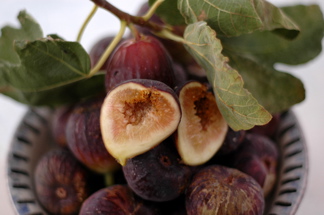 |
Fresh figs can be eaten out of hand, prepared as an appetizer or served as a dessert. They pair nicely with citrus, pork and cheeses such as Cheddar, chevre and ricotta. |
With a flavor beyond compare, fresh figs are truly a rare treat. They have perhaps the shortest life span of all fruits on the market—once harvested, they only last about a week. As a result, about 90% of the world's fig harvest is dried.
Varieties
There are more than 600 different varieties of figs, with shapes ranging from round to oval and colors ranging from white to purple-black. Many producers and food stores simply classify their figs by color (yellow, green, dark), but these are the most well-known varieties by name:Mission (Black Mission)—Purple-black in color with extremely small seeds. The watermelon-colored flesh is dry in texture and sweet in flavor. One of the most common figs available.
Calimyrna—Green-skinned, large and squat. Great for eating out of hand, with a sweetly flavored white flesh. Called Calimyrna when grown in California; Smyrna when from Turkey.
Brown Turkey (San Pedro, San Piero)—Tan to copper in color and pear-shaped. The rich red flesh is somewhat mellow in flavor.
Kadota (Dattero, Dottato)—Yellow-green, small in size and thick-skinned. The sweet and creamy amber-colored flesh is almost seedless. It is a favorite for canning and drying.
Adriatic—Violet- to brown-skinned with a pear shape. A higher sugar content makes them great for eating out of hand or making fig bars, fillings and pastes.
Celeste—Tan to violet in color, small to medium-sized and pear-shaped. The pinkish flesh is mildly sweet.
History
Figs were brought to the United States by Spanish Franciscan missionaries who first planted them at the San Diego Mission in 1759. Hence, the "Mission" fig, one of California's most popular varieties.Buying Tips
Fresh: Available from June through October, fresh figs should be plump and firm with no signs of bruising. They should have a rich color, mild fragrance and feel soft to the touch, not mushy.Dried: Available year-round, dried figs are usually sold in boxes or cellophane packages. The figs should give slightly when gently squeezed through the package.
Figs are also sold candied or canned in sugar or water. At natural food stores and some supermarkets, you'll also find fig concentrate. This thick, syrupy, seedless puree is used as a cake and dessert flavoring and topping for ice cream and fruit.
Storage Tips
Fresh: Extremely perishable, fresh figs should be used soon after purchasing. They may be refrigerated for two to three days.Dried: Store packages at a cool room temperature, or in the refrigerator after opening. Wrap well so they won't become too hard or dry. They should keep for several months. Dried figs may also be frozen