Mirin
See also sake.
|
|
|
An important ingredient in Japanese cuisine, mirin adds sweet, bright flavor to noodles, salads, sushi and teriyaki. |
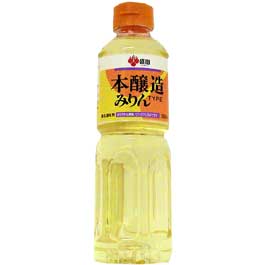

Essential to the Japanese cook, mirin is a sweet, pale yellow cooking wine made from glutinous rice. It's similar to sake (another well-known rice wine), but lower in alcohol. Commonly used as a flavoring agent, mirin adds sweetness to a variety of dishes, sauces and glazes, particularly yakitori, teriyaki and sukiyaki.
Mirin is sometimes simply referred to as rice wine.
Varieties and Buying Tips
Look for mirin at Japanese markets or in the gourmet section of some supermarkets. Because traditional mirin-making techniques are quite expensive and time-consuming, manufacturers have produced a variety of less expensive grades or substitutes. Mid-grades are your best bet for everyday cooking—be weary of the cheapest bottles, which are probably just mixtures of grain alcohol, sugars and flavorings. True mirin (known as hon-mirin) can be more expensive than the best grades of sake.
History
In the Edo period, mirin was imbibed as a sweet sake. Today, premium sake is drunk instead, but mirin is still the base of a ceremonial Shogatsu (Japanese New Year) drink. Called otoso, the mirin-soaked mixture of herbs is said to ensure good health and vitality.
Storage Tips
Keep refrigerated after opening.
Usage Tips
• Use mirin in small amounts—its flavor is quite strong.
• Quickly boil (called nikiri mirin in the Kansai style of cooking) or use as-is.
• Sprinkle over broiled fish for a bright touch.
• Add to soups and noodles.
• Use as a marinade for fish or meat.
• Whisk into savory dipping sauces for tempura or dressings for vegetables and salads.
• Use in place of soy sauce, sugar and honey in main dish recipes.
Try one of our favorite mirin recipes:
Daikon and Carrot Salad
Beef and Scallion Rolls (Nege Maki)
Asian-Marinated Cocktail Drummettes