Tofu
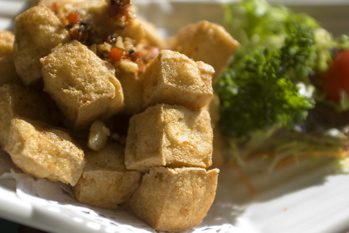 |
Tofu is a vegetarian and vegan staple, able to stand in for meat or dairy products.
|
With a variably soft or firm texture and pliable flavor, tofu is a vegetarian and vegan staple, able to stand in for meat or dairy products in almost any food.
History
Tofu originated in China over 2000 years ago, supposedly during the time of the Han dynasty. According to legend, the world’s first tofu sprang from the fluke experimentation of an adventurous chef who tried flavoring a batch of cooked, puréed soybeans with nigari (a magnesium chloride powder made from seawater) and wound up with bean curd. Nigari remains a common element in soybean production, and soybeans remain incredibly popular in Asian dishes.Varieties
Tofu comes in a wide range of both fresh and processed varieties. The two primary types of fresh tofu are traditional and silken. Both are available in soft, firm and extra-firm varieties, which differ in the amount of water that is extracted during their processing.Firmer tofu indicates that more water has been extracted during processing, leaving it with denser consistency. The firmer the tofu, the more likely that it will keep its shape after being prepared. Softer tofu is useful when the tofu will be blended with other ingredients, such as in soups or pureed dishes.
Silken or soft tofu, a traditional Japanese variety, is made through a slightly different process than traditional tofu, yielding a creamier, more delicate result. Even the extra-firm variety of silken tofu maintains a custard-like texture that is much smoother than other tofu. This makes it ideal for any dish that calls for blended tofu, often including sweeter recipes such as desserts and smoothies.
Tofu can also be bought in more processed varieties such as flavored, baked or steamed tofu.
Nutrition Notes
Tofu is an excellent source of soy protein, isoflavones, B-vitamins and iron. When tofu is made by adding calcium salt to soy milk (rather than by adding magnesium salt or nigari), it is also a significant source of calcium. If looking to use tofu to increase your calcium intake, be sure to check the ingredients when purchasing.
All tofu is cholesterol-free and low in salts and saturated fat, with softer tofu generally yielding a lower fat content. Tofu is also available in reduced-fat varieties.
Buying Tips
Before purchasing, consider the tofu variety that will best meet the needs of your specific recipe.In natural food stores, tofu can be found alongside refrigerated dairy products, and in supermarkets it will generally be located in the produce section.
Tofu is often sold in aseptic boxes in specialty and Asian markets and is sometimes even sold loose, in water-filled bins. If buying loose tofu, pay attention to whether or not the water in the bin is clean, and make sure that the tofu has been resting fully-submerged underwat