White Vinegar
 |
|
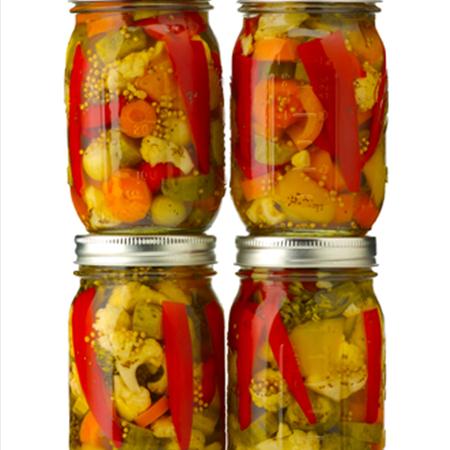
In addition to the thousands of other uses for white vinegar, it is the recommended preservative for pickling and canning projects. |
See also vinegar.
White vinegar is that all-purpose pantry staple with a distinct, lingering smell and amazing ability to perform hundreds of tasks. It is the product of distilled ethyl alcohol, which may limit its usefulness as a “cooking” vinegar.
The most common uses for white vinegar include pickling and canning. It’s famous for coloring Easter eggs and is the highest selling vinegar product on the market.
This is a “low-grade” vinegar with a tart, unpalatable taste.
Buying Tips
All white vinegars, regardless of brand, are inexpensive. Most are made with 5% acidity.
Storage Tips
White vinegar will last indefinitely. Do not refrigerate.
Usage Tips
• Add a little white vinegar and salt to water while boiling eggs. They’ll peel easily after cooling.
• Use white vinegar in basic sauces or as a meat tenderizer.
• If you want a less sour pickling liquid, add a little sugar.
• Make herb vinegar by immersing fresh leaves and stems in a container. Wait two weeks and strain.
Substitution Tips
• Use lemon or lime juice instead of small amounts of vinegar in most recipes.
• For pickling and canning, use any vinegar containing at least 5% acidity. Dark vinegars may affect the color of the foods.
Try one of our favorite white vinegar recipes:
Homemade Buttermilk
Thai Cucumber
LEMON ROSEMARY PICKLED GREEN BEANS